Thursday, December 16, 2010

Bollywood: A Briefly Timed History!

By Anant Mathur (December 16, 2010)

Film business being as bad as it's been the last two years, let's have a look at some factors that are behind the success and failure of films in Bollywood.


Silver and Gold

Today, most films do 80% of their business in the first weekend. Gone are the days of Golden and Silver jubilees. Films nowadays find it hard to survive beyond the first week. Even successful films like 3 Idiots, Dabangg and Ghajini have a hard time getting past 8 weeks in theatrical release. Perhaps it’s time to change week 4 and week 8 to silver and golden jubilees, respectively.


The 1980s and 90s

After officially being declared an industry by the government in 1998, Bollywood went through a drastic change. In 1998, the maximum budget for a film was about 10-15 crore rupees and one or sometimes two films were released each week. The highest salaried stars were paid between 1-2 crores, a large sum even by today's standards. Though being an official industry was good news, the business started to suffer as producers no longer had access to mafia money or black money; being a government recognized industry meant following legal channels. The business was becoming very transparent, which was not the case earlier. Mafia money was no longer welcomed causing some of the top producers/directors of the era, who couldn't embrace the new format, to simply fade away or retire (Manoj Kumar, Dev Anand, Prakash Mehra, Rajiv Rai, Rajkumar Kohli, Govind Nihalani, Umesh Mehra, Deepak Bahry, etc.).

Those who survived (Yash Chopra, Mahesh Bhatt, Vidhu Vinod Chopra, Subhash Ghai, Ramesh Sippy, Sooraj Barjatya, Sajid Nadiadwala, Ram Gopal Varma, Rakesh Roshan, etc.) took time to recover, but bounced back and took control of the suffering industry. Several of these survivors saw an opportunity in going public and successfully incorporated their production houses.


Generation Next

As had happened to Hollywood in the 1960s, the generation of Bollywood filmmakers was changing and the torch was being passed. The end of the 1990s saw some new blood enter the industry (Aditya Chopra, Karan Johar, Ronnie Screwvala, Sanjay Leela Bhansali, Ashutosh Gowarikar, Vipul Shah, Dhillin Mehta, Ekta Kapoor, etc.).

With the mafia out and public funds in their hands, these young filmmakers decided to take Bollywood in a new direction and started producing multiple films and launching new directors (Farah Khan, Farhan Akhtar, Rajkumar Hirani, Anurag Kashyap, Anurag Basu, Nikhil Advani, Kunal Kohli, Shaad Ali, Imtiaz Ali, Rohit Shetty, Rohan Sippy, etc.).

In the new millennium, those who dominated the industry in the 1980s and 90s (Dharmendra, Rishi Kapoor, Sridevi, Madhuri Dixit, Karishma Kapoor, Manisha Koirala, Sunny Deol, Raveena Tandon, Nana Patekar, Pooja Bhatt, Amrita Singh, Meenakshi Sheeshadri, Kishore Kumar, R.D. Burman, Majrooh Sultanpuri, Laxmikant-Pyarelal, Anand Bakshi, Lata Mangeshkar, Asha Bhosle, Kalyanji-Anandji, etc.) were replaced by a new breed of actors (Hrithik Roshan, Aishwarya Rai, Kareena Kapoor, Katrina Kaif, Abhishek Bachchan, Shahid Kapur, Priyanka Chopra, Ranbir Kapoor, Deepika Padukone, Sonam Kapoor, etc.) and artists (A.R. Rahman, Shankar–Ehsaan–Loy, Vaibhavi Merchant, Sajid-Wajid, Salim-Suleiman, Vishal-Shekhar, Shaan, Sunidhi Chauhan, Kunal Ganjawala, Kailash Kher, Shreya Ghoshal, etc.). Some did survive the 1990s and are still going strong (Amitabh Bachchan, Anil Kapoor, Shahrukh Khan, Kajol, Salman Khan, Sanjay Dutt, Aamir Khan, Ajay Devgan, Akshay Kumar, Sonu Nigam, Juhi Chawala, Javed Akhtar, Gulzar, Anu Malik, etc.).

In the late 1990s, television boomed in India and now the industry faced its biggest challenge. How to get the audience into the theaters when they could get similar entertainment at home for FREE?


Corporate Express

Approximately 5-6 years ago, after the sudden success of several films, corporate giants like Reliance, Aditya Birla Group, Tata, Sahara, Percept Holdings, Adlabs, Eros, UTV and T-Series noticed the impact of Bollywood films and decided they wanted a piece of the pie. In order to entice the top stars and filmmakers to work with them they started offering ridiculous amounts like 10-15 crores per film to stars who were earning 2 crores at the time. I know gasoline prices are going up but, stars don't need to make 10 crores per film and directors like Sanjay Leela Bhansali have no right to charge 27 crores when their previous films haven't worked at the box office. The corporates were used to dealing in millions, for them 10 crores was pocket change. Their philosophy impacted the film world drastically. Film budgets skyrocketed from 10 crores to 100 crores even though no film in history had ever had collections of 100 crores. Their strategy was to go big. They believed films were a brand and like any brand if you have a great marketing strategy people will buy it! Sadly, this would be their downfall - selling soap and selling films are two entirely different things.


Dawn of the Multiplexes

With corporates also came the birth of multiplexes, single screens were quickly becoming a thing of the past. Audience once again had a reason to flock to the theaters. These new multi-screen theaters were the new fad and at first no one minded paying 200 rupees per ticket, but over time this too would fade away.

With 10 screens and up to 40 shows a day in one multiplex, corporates strategized a wider release for their films. No more houseful boards – “get the public into as many seats as possible in the first week and recover the cost” – was the new mantra. Forget golden jubilees it was the first weekend that mattered now.

Ten years ago one or two films would release each week in single screen theaters with a control on the number of prints. Houseful boards could be seen week after week and the exhibitors would have a hard time taking down a successful film. But, with corporates coming in, all that went out the window. They started the trend where 1500-2000 prints of a film were released. No longer did anyone have to face houseful boards, with multiplexes, the audience had to pay a little more but they were almost guaranteed a seat and not just any seat, they’re the most comfortable seats in the world.

Due to the success of multiplexes, a big change came about, instead of 1 or two films per week, now anywhere from 2-6 films were being released week after week. Bollywood was now running like a business, but they were turning out more films than the audience demanded. Films that the makers spent 3-4 years to write and shoot were now being shelled out in a matter of weeks or months. Directors turned producers and as producers they started making multiple films yearly, not able to concentrate on each film fully, the films began to suffer. The stories lacked impact and entertainment value but the audience was still flocking to the multiplex on sheer curiosity.

But the new format lacked star power, films were being sold as a brand and their success or failure no longer rested on the star’s shoulders. Distributors were given the film only after the production house got their money. The distributor had no idea if the film they’d purchased is good or bad. They were paying for the brand.


Rising Stars

It became difficult for independent producers to survive in the corporate market. Stars joined hands with corporates and charged a mammoth fee, thus, it became impossible for independent producers to approach them. Distributors were happy to deal with corporates and showed little interest in low budget films. It’s a fact that, in Bollywood, it was now easier to get 40, 50 and even 100 crores to make a film with super stars than to get 4 or 5 crores to make a film with newcomers or more affordable stars. Even for experienced filmmakers like Priyadarshan, helming a small budget film seemed impossible. The fate of the films at the box office no longer matter corporates had public money to throw at films, budget and brand power were now taking precedence over talent and good stories as selling points. Although a 5-10 crore film could yield 30-40 crores in profits, the corporates were happy with 50 crore films yielding 5 crores in profit. To them filmmaking was more a hobby than a labour of love.

The next four years saw several hit films each year. Still no film had crossed the 100 crore mark in collections, but the corporates thought they had found the golden goose and invested heavily with budgets in the 100-150 crores range.


Strike It Rich

The year 2009 had a horrible start, during the first three months there were no hits in sight, every big budget film failed to click at the box office. Producers/distributors were trying to negotiate a new deal with the multiplex owners. Then, in April, the producers/distributors went on strike for more than two months. The producers/distributors' demand was for a 50 per cent share of revenue earned from their films. But multiplex owners were unwilling to give up their current cut, which could be as high as 60 per cent. Suddenly, thanks to the media, the public saw a side of bollywood it wasn’t aware of... GREED.

With no end in sight for the strike, the audience discovered a new means of entertainment. The Indian Premiere League (IPL) had quickly caught on as the new phenomenon. Cricket was the perfect craze to replace Bollywood mania. It would be more than two months before the strike ended. Only small budget films were released at single screens during that time, denying the cine goers entertainment during the summer vacations.

The future looked bleak, big films like Delhi 6, Chandni Chowk To China and Luck By Chance had already failed to create box office magic in the first quarter. And the failure of mega budget films like Kambakht Ishq, Aladin, Blue, What's Your Raashee?, De Dana Dan and London Dreams in the second half only added to an already dull 2009. Finally, some relief was felt when, 3 idiots, the final release of the year went on to become the highest grossing film in history – becoming the first Bollywood film to cross 150 crores in collections and only the 2nd film, after Ghajini in 2008, to cross 100 crores in collections.


…And Music! Music! Music!

The birth of reality TV was another challenge now facing Bollywood. With shows like Channel V Popstars, SaReGaMaPa Challenge, STAR Voice of India and Indian Idol dominating the TV screens, top music directors and singers had the opportunity to become judges. They were receiving ridiculous sums of money to appear on these shows many folds higher than what they received from films. Because of these shows, their time was divided between films and Television. The end result was; out went the creativity ‘cause we’re into money. So now, films had bad scripts and lousy music.

The one thing that has always drawn an audience into the theaters is the music of a film. Even with horrible stories in the 1980s and 90s the one ingredient that was consistent with each film was the music was always super hit. Today, this is not the case. No matter how good the reports of the film are, if a film has lousy music, the promos don't work and people are not as eager to see it and the branding fails. Guzaarish and Band Baaja Baraat are recent examples of this.


Mediaocre

In the past, media wasn't so involved with the release of films and computers didn’t play a role. It took several days for information about collections and the film’s report to reach the audience, so a film had a chance to be seen. Nowadays, with twitter, facebook, SMS and smart phones, moments after the film is released its reports and reviews are available all over the internet and in trade publications/websites. People can tweet or SMS their friends about a film from the cinema hall itself. Before a film has a chance to breathe its first breath, it's declared a flop and it's dismal collections are the talk of the day. “Better luck next week” says the trade analyst to the exhibitors. But next week it's the same story. If we're lucky there are just about 2-3 films worthy of being watched each year.


FREEdom of Choice

Most people are not made of money, they have a certain entertainment budget. A common man might only be able to take his family to see 1 or 2 films a year. He will be selective and likely watch an entertainer like Golmaal 3 over a depressing over budgeted film like Guzaarish. Every time he goes to a multiplex with his family it's costing him 1000 rupees, it's not likely he will go too many times, especially when the film can be seen on TV for FREE in two months. So, he waits and selects maybe the one or two films he thinks his family will enjoy the most.

Satellite rights have also caused a fall in the theatrical business. With a multiplex movie ticket costing anywhere from 150 to 500 rupees per ticket it is becoming very difficult for the common man to take his family to the movies. He would rather wait till the film airs on TV and enjoy it with his family for FREE. The big screen big sound doesn't interest him when he can save 1000 rupees and watch the film in the comfort of his own home, did I mention, "for FREE".


Failure To Communicate

2010 has been one of the worst years in the history of Bollywood. It is hard to pinpoint exactly why the audience stayed away from the theaters. The reports suggest “lack of good stories” tops the list. With only 3 films worthy of being declared hits, 2010 will mark a turning point in the way corporates conduct business. With the failure of films like My Name Is Khan, Kites and Raavan which cost 100 crore or more, the corporates have decided to stay away from such big budgets. Several films have been put on hold while others have had their budgets slashed to accommodate the current condition. It’s hard to determine if we will ever see films with 100 crores budget, but at present it is highly unlikely.


Fatefully

These are just some of the factors that truly determine the fate of a film. Many other factors come into play and make it difficult to truly judge what has caused a film to fail. It's usually not just one factor but a combination of these that decide how successful or unsuccessful a film will be.

One thing is certain, films don’t work as brands. The focus needs to re-shift to the superstars. It’s the superstars who can get the audience into cinema halls not marketing teams. Dabangg was seen by millions because of Salman Khan not because it was a brand. Salman’s performance was being appreciated from the promos themselves. It created a buzz which is why the film worked.

For decades films have worked because of the ability of its superstar to carry the film on their shoulders, when you take that away, it not only hurts its sustainability, but also detaches it from its soul.

© Anant Mathur. All Rights Reserved.

Wednesday, December 8, 2010

Tip # 29: Sequels

By Anant Mathur (December 08, 2010)

It makes me laugh whenever I hear that they're making a sequel to a film in Bollywood. I mean these filmmakers don't even understand the difference between a sequel and a companion piece.

             For those who are unaware:


             A sequel is a movie that is complete in itself but continues the narrative of a preceding  
            work. The first film introduces the characters, settings and ideas, and the rest of the  
            films are sequels that continue the story.

             A companion piece is a creative work that is produced as a complementary work to
             another stand-alone project, but storywise has nothing to do with its predecessor.
 

A great example of sequels is Back To The Future, where we follow Marty and Doc on their adventure through time - their characters don't change - Marty has the same girlfriend in all three movies, his parents are the same, the other characters stay the same, the only thing that changes is time. It’s also awe inspiring to see the details that went into making this trilogy.
 

Star Wars is also a well know Trilogy where we follow Luke Skywalker and Han Solo on their adventure through space. Even in the prequel Star Wars trilogy, we are following Anakin Skywalker through the three films. The characters don't change.

While a companion piece does not necessarily need to take place within the same "universe" as the predecessor, it must follow-up on specific themes and ideas introduced in the original work. It must also be intentionally meant by its creator to be viewed alongside or within the same context as the earlier work. Examples would include the Road to... pictures starring Bing Crosby, Dorothy Lamour, and Bob Hope, and films featuring the Three Stooges, the Marx Brothers, or the Tramp.
 

That being said, in Bollywood sequels, the characters and storylines always seem to change and for this reason alone they can not be called sequels. For example, Krrish is not a sequel to Koi Mil Gaya. Krrish is about different character and set in a different locations with a different plot. Rohit who Koi Mil Gaya is based on, is briefly shown in Krrish. If Krrish was about Rohit's journey into becoming Krrish, it could've been called a sequel.
 

In the Munna Bhai series, the characters and plot are different between the two films. Munna got married to Chinki at the end of the first film and yet in Lage Raho Munna Bhai he's involved with Jhanvi. Boman Irani, Jimmy Shergill and several other cast members from the previous film are playing different characters. The same holds true for Golmaal, Golmaal Returns & Golmaal 3.

There is yet to be a true sequel to a film made in Bollywood. But then again they can't make something they don't understand. And sequels, as easy as it may be to say, are a very hard thing to create.


© Anant Mathur. All Rights Reserved.

Wednesday, December 1, 2010

Ten Most Entertaining Bollywood Films

By Anant Mathur (December 01, 2010)
 
10.
DON (1978)
Starring: Amitabh Bachchan, Zeenat Aman, Pran, Iftekhar, Om Shiv Puri, Satyen Kappoo, Kamal Kapoor, Arpana Choudhary, Helen, Shetty, Jagdish Raj, Pinchoo Kapoor, Mac Mohan, P. Jairaj
Director: Chandra Barot
Producer: Nariman A. Irani
Music: Kalyanji-Anandji
Analysis: Don is a fantastic film. I don't want to reveal too much in case you haven't seen it. But it's a film that doesn't disappoint. I strongly recommend that you see it if you havent. It's Salim-Javed at their finest and features Amitabh Bachchan in one of his most memorable performances.


9.
MUNNA BHAI M.B.B.S. (2003)
Starring: Sunil Dutt, Sanjay Dutt, Arshad Warsi, Gracy Singh, Boman Irani, Jimmy Shergill, Rajkumar Hirani, Kurush Deboo
Director: Rajkumar Hirani
Producer: Vidhu Vinod Chopra
Music: Anu Malik
Analysis: It's hard to believe this was Rajkumar Hirani's first film. Not at any point do you feel that this film was made by a newcomer. Rajkumar Hirani's understanding of a smart comedy needs to be lauded. 


8.
SHARAABI (1984)
Starring: Amitabh Bachchan, Jayapradha, Pran, Om Prakash, Deepak Parashar, Smita Patil, Mukri, Ranjit, Suresh Oberoi, Satyen Kappoo, Jankidas, Viju Khote, Pinchoo Kapoor, A.K. Hangal, C.S. Dubey, Chandrashekhar, Mayur, Sudhir, Bharat Bhushan
Director: Prakash Mehra
Producer: Satyendra Pal
Analysis: Sharaabi is my favourite Amitabh Bachchan film. I simply love Prakash Mehra's dialogues in this film and Mr. Bachchan's delivery is outstanding. Sharaabi is a lesson in dialogue writing. Not only are the dialogues strong they are full of philosophical thoughts and poetry, something today's generation of writers lack immensely.


7.
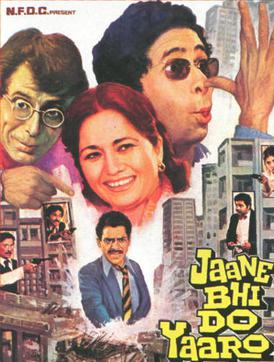
JAANE BHI DO YAARO (1983)
Starring: Naseeruddin Shah, Ravi Baswani, Neena Gupta, Satish Shah, Om Puri, Pankaj Kapur, Satish Kaushik, Rajesh Puri
Director: Kundan Shah
Producer: National Film Development Corporation
Music: Vanraj Bhatia
Analysis: No list would be complete without the inclusion of Jaane Bhi Do Yaaro. Probably one of the finest comedies ever made. This film proves it's not the budget but the content which is king. Made for peanuts, Jaane Bhi Do Yaaro delivers in a way that no other film does. A showcase of upcoming talent who will entertain us for the next 3 decades, Jaane Bhi Do Yaaro deserves a look by all who haven't seen it and another look by those who have.
6.
GOL MAAL (1979)
Starring: Amol Palekar, Utpal Dutt, Bindiya Goswami, David, Deven Verma, Dina Pathak, Om Prakash
Director:
Hrishikesh Mukherjee
Producer: N.C. Sippy
Music: R.D. Burman
Analysis: It's very difficult to make a comedy, but to do it well, that's the talent of Hrishikesh Mukherjee. Gol Maal has the same flavour of all his other comedies. What sets this film apart from other comedies is it's simplicity. From Amol Palekar explaining why he's wearing a short Kurta to why he's playing hooky from work, it's the simplicity we enjoy in this classic.


5.
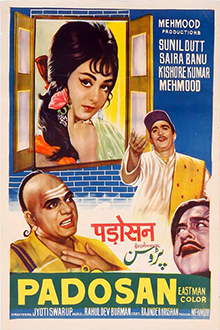
PADOSAN (1968)
Starring: Sunil Dutt, Saira Banu, Kishore Kumar, Mehmood, Om Prakash, Agha, Mukri
Director: Jyoti Swaroop
Producer: Mehmood, N.C. Sippy
Music: R.D. Burman
Analysis: Padosan is a classic, I don't know anyone who doesn't love this film. The characters are so well etched that you're drawn to them instantly. One can't even imagine anyone else playing these roles. Whether its the scene where Vidyapathi is trying to teach Bhola how to sing or the scene where Bhola is trying to woo Bindu away from Master Pillai, the entire film is full of sequences that keep you in splits.
4.
DABANGG (2010)
Starring: Salman Khan, Sonakshi Sinha, Arbaaz Khan, Sonu Sood, Vinod Khanna, Dimple Kapadia, Mahesh Manjrekar, Anupam Kher
Director: Abhinav Kashyap
Producer: Arbaaz Khan, Malaika Arora Khan, Dhillin Mehta
Music: Sajid-Wajid, Lalit Pandit
Analysis: If there's any film that brings back the flavour of Sholay, it's Dabangg. Not since Sholay have we witnessed such strong dialogues and seen such entertaining action sequences in a Bollywood film. The songs are a delight and stimulate your emotions. Every song leaves an impression in your mind and you're still humming them long after the film is over. It's not difficult to see why this is one of the highest grossing films of all time.


3.
3 IDIOTS (2009)
Starring: Aamir Khan, Kareena Kapoor, Sharman Joshi, R. Madhavan Director: Rajkumar Hirani
Producer: Vidhu Vinod Chopra
Music: Shantanu Moitra
Analysis: 3 Idiots inspires, entertains and educates - this should be the backbone of every film. Rajkumar Hirani is arguably the finest filmmaker in India, today. Few filmmakers take the time to make a film. Most are churning out multiple films a year. But in order to deliver good fillms a filmmaker needs to spend time on the screenplay, Mr. Hirani understands this perfectly. 3 cheers for the man who introduced us to "Jaado Ki Jhappi" with Munna Bhai M.B.B.S., showed us "Gandhigiri" in Lage Raho Munna Bhai and taught us the wisdom of "All Is Well" in 3 Idiots. Can't wait for his next catch phrase.


2.
CHUPKE CHUPKE (1975)
Starring: Dharmendra, Sharmila Tagore, Amitabh Bachchan, Jaya Bhaduri, Om Prakash, David, Usha Kiran, Asrani
Director: Hrishikesh Mukherjee
Producer: N.C. Sippy,
Hrishikesh Mukherjee
Music: S.D. Burman
Analysis: Chupke Chupke is my favourite comedy of all time, I can watch this film anytime. It's sad that we don't see comedies of this caliber any more. Everything from the jokes to the acting is superb. 


AND THE MOST ENTERTAINING BOLLYWOOD FILM OF ALL TIME IS...


1.
SHOLAY (1975)
Starring: Sanjeev Kumar, Dharmendra, Hema Malini, Amitabh Bachchan, Jaya Bhaduri, Amjad Khan, Iftekhar, A. K. Hangal, Asrani, Jagdeep, Sachin, Mac Mohan, Leela Mishra, Helen
Director: Ramesh Sippy
Producer: G.P. Sippy
Music: R.D. Burman
Analysis: Not surprising that Sholay is number 1, I don't feel I need to explain why, doing so would only demean this classic.


IF YOU ENJOYED THIS, PLEASE VISIT MY POSTS ON: 
Ten Bollywood Cult Films

© Anant Mathur. All Rights Reserved.

Tuesday, November 30, 2010

Ten Worst Bollywood Films

By Anant Mathur (November 30, 2010)
 
10.
DRONA (2008)
Starring: Abhishek Bachchan, Priyanka Chopra, Kay Kay Menon
Director: Goldie Behl
Producer: Shrishti Behl
Music: Dhruv Ghanekar
Analysis: What can I say about this supreme disaster of a film. Its too childish an attempt to even be considered as a contender for a professional piece of work. With the kind of budget this film had, one would think the producer could have hired an experienced writer. I can't even say that it was a good idea because even the idea is not altogether there, it's more like several thoughts trying to come together as one idea, and it doesn't work at all.


9.
LOVE STORY 2050 (2008)
Starring: Herman Baweja, Priyanka Chopra, Boman Irani, Archana Puran Singh, Dalip Tahil, Kurush Deboo
Director: Harry Baweja
Producer: Pammi Baweja
Music: Anu Malik
Analysis: Having top class special effects is of no use when the film's story lacks power. Probably one of the first time travel movies to come out of Bollywood, Harry Baweja had a lot of material to use as reference, sadly instead of using this material to inspire, he simply tries to copy and this comes across as a cheap imitation of the original works.


8.
HOUSEFULL (2010)
Starring: Akshay Kumar, Ritesh Deshmukh, Lara Dutta, Deepika Padukone, Jiah Khan, Arjun Rampal
Director: Sajid Khan
Producer: Sajid Nadiadwala
Music: Shankar-Ehsaan-Loy
Analysis: You know it's a bad comedy when you don't laugh even once through out the film. Forget laughing in this film you never break into a chuckle.

 
7.
NEAL 'N' NIKKI (2005)
Starring: Uday Chopra, Tanisha, Abhishek Bachchan
Director: Arjun Sablok
Producer: Aditya Chopra, Yash Chopra
Music: Salim-Suleiman
Analysis: This film has nothing to offer other than some T & A. Easily the worst film from the Yash Raj Films banner it was the first example of a new direction YRF has taken - make films on the sole basis of YRFs reputation regardless of how dumb the stories are.
 
6.
JAANI DUSHMAN: EK ANOKHI KAHANI (2002)
Starring: Sunny Deol, Armaan Kohli, Manisha Koirala, Akshay Kumar, Suniel Shetty, Aftab Shivdasani, Arshad Warsi, Rambha, Sonu Nigam
Director/Producer: Rajkumar Kohli
Music: Anand Raj Anand, Anand-Milind, Sandeep Chowta
Analysis: After seeing the original, with superstars like Sunil Dutt, Sanjeev Kumar, Shatrughan Sinha, Vinod Mehra, Rekha, Neetu Singh and Jeetendra, I had great expectations from this remake. Especially, since it was being made by the original director, sadly though, the film is no patch for it predecessor. The greatest strength of the original was it's suspense in not knowing who the monster is, but when the monster is replaced by a revenge seeking snake with magical powers, well, you can probably imagine how bad this film is. The original was a super hit and became one of the highest grossing films of 1979. The remake was a disaster and destroyed the careers of many of its stars.


5.
JANASHEEN (2005)
Starring: Feroz Khan, Fardeen Khan, Celina Jaitley, Pinky Harwani, Kashmira Shah, Archana Puran Singh, Yash Tonk
Director: Feroz Khan
Producer: Feroz Khan
Music: Anand Raaj Anand, Channi Singh, Sukhwinder Singh
Analysis: Being a huge fan of Feroz Khan's Qurbani, I spent $35 on purchasing the DVD of this film and regret spending each penny. It's sad that this is the last film Feroz Khan ever directed, I would've loved to see his remake of Qurbani with Fardeen Khan in his father's role and Feroz Khan in Amjad Khan's role.


4.
NAACH (2004)

Starring: Antara Mali, Abhishek Bachchan
Director: Ram Gopal Varma
Producer: Ram Gopal Varma
Music: Suleiman Merchant, Amar Mohile
Analysis: There's nothing quite as bad as an idea gone wrong. Naach may seem like a good idea on paper, but it has not translated into a good film. Even the performances leave a lot to be desired. The erotic dance sequences actually hurt the films credibility instead of helping its narrative. If only RGV could have taken the subject seriously and translated it into a film we may have enjoyed instead of exposing us to such torture.


3.
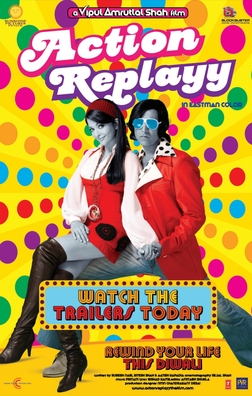
ACTION REPLAYY (2010)
Starring: Akshay Kumar, Aishwarya Rai, Aditya Roy Kapoor, Randhir Kapoor, Om Puri, Neha Dhupia, Rajpal Yadav
Director: Vipul Amrutlal Shah
Producer: Vipul Amrutlal Shah
Music: Pritam Chakraborty
Analysis: Action Replayy was one of the most anticipated films, since it's based on the time travel genre, sadly the film doesn't live up to an ounce of it's expectations. Vipul Shah tried hard not to show, but it's easy to see he has ripped of Back to the Future and tried to cover it up. In his attempt to cover up the fact that he has stolen the idea from a fantastic Hollywood film, he lost the soul of the film. When Marty becomes Bunty, you know where this film is headed. Instead of being about time travel as the title suggest, the film ends up being a bickering contest between Aishwarya Rai and Akshay Kumar and although it has some good jokes the screenplay just doesn't work. The story would've done better as a stand-up comedy act or duologue.


2.
RED ROSE (1980)
Starring: Rajesh Khanna, Poonam Dhillon, Om Shivpuri, Satyen Kappoo, Roopesh Kumar
Director: Bharathi Rajaa
Producer: M.P. Jain, Ravi Kumar
Music: R D Burman
Analysis: I was 14 years old when I saw this film and to this day it gives me the creeps. Rajesh Khanna (who gave us hits like Amar Prem, Anand, Daag and Aradhana) was one of my favourite actor until I saw this film. I won't go into details as it's still unbearable to think about it, but this is the worst Rajesh Khanna film you will ever see and I request you not to see it, not even for curiosity's sake. 


AND THE WORST BOLLYWOOD FILM
OF ALL TIME IS...


1.
RAM GOPAL VARMA KI AAG (2007)
Starring: Amitabh Bachchan, Mohanlal, Ajay Devgn, Prashant Raj, Nisha Kothari, Sushmita Sen
Director: Ram Gopal Varma
Producer: Ram Gopal Varma
Music: Ganesh Hegde, Prasanna Shekhar
Analysis: As good as Sholay is, and will always remain the top rated Bollywood film, Ram Gopal Varma Ki Aag is at the opposite end of the spectrum. It's hard to believe any film could ever be as bad as this remake. It is not the first time Sholay has been remade, others have tried and failed miserably, but this much hyped film, with Amitabh Bachchan playing the role of Gabbar Singh (known as Babban Singh due to copyright issues), is the ultimate in film misery. I'm just glad the Sippy clan was able to keep RGV from copying the names of the irreplaceable characters in Sholay and the films title. Not all is lost though, RGVs Aag will always be utilized as a measuring stick whenever we're judging bad films.


IF YOU ENJOYED THIS, PLEASE VISIT MY POSTS ON: 
Ten Bollywood Cult Films


© Anant Mathur. All Rights Reserved.

Wednesday, November 24, 2010

Stop Making Excuses!

By Anant Mathur (November 24, 2010)

Now that it’s official, Guzaarish is a super flop at the Box Office, the so called critics who gave it 4+ stars are looking for excuses as to why the film flopped. Here are some of their top reasons:

1) It caters to a really tiny audience who like cinema that dares to be different
2) It’s a risk to have the hero of the film almost entirely on a wheel chair
3) The generous usage of English in the narrative.
4) The film failed to create any kind of a buzz prior to its release
5) The music did not catch on with listeners.
 
I will now try to justify these queries with some explanations: 

It caters to a really tiny audience
Is that why it was released on 750 screens? The makers of this film obviously made it for a large audience; otherwise they wouldn’t have spent 80 crores on it. No one wants to see a sad film these days.

It's a risk to have the hero of the film almost entirely on wheelchair 
People always complain that Hindi films have the same kind of characters and storylines and they’re looking for something different. Now here is Guzaarish which offers all that and now these same people who asked for it are saying “Its a risk to have the hero of the film almost entirely on a wheel chair”. I mean gimme a break, why is it a risk to have the character on a wheel chair, who said he’s suppose to be a hero? Not every person in this world has what it takes to be a hero, so why does the lead character in every film need to be heroic; it should depend on the story.
 

The generous usage of English in the narrative
This of course is my personal favourite. I mean how dumb are these critics, what do they think that the common man in India doesn’t know how to speak English? How arrogant is that? Even taxi drivers in India can speak better English than taxi drivers in countries like USA, Canada and UK. Didn't people go to see Sanjay Leela Bhansali's Black which was almost entirely in English and managed to make a profit for its distributors because the budget was only 18 crores.

The film failed to create any kind of a buzz
What do you expect when the highlight of your promos is a fly sitting on Hrithik Roshan’s nose or Aishwarya Rai trying to play air drums which looks more fake than Shahrukh Khan’s mustache in Rab Ne Bana Di Jodi.

Why did the music not catch on with listeners
Well, it’s no good, that’s why. There’s a reason films have lyricist and music directors. When a filmmaker like Sanjay Leela Bhansali tries to justify his 25 crore salary by doing everything in a film, what can one expect. He should have left the music to the professionals.

As entertaining as the above suggestions are, there’s only one reason that Guzaarish failed – It lacks entertainment!
 
Here’s my advice to everyone who’s trying to justify the misfortune of Guzaarish: Stop looking for reasons why the movie failed, it’s a flop, it was going to be a flop, it was evident from the promotion. I predicted it would be a flop and it is. The reason is simple, it’s a big budget movie and those rarely make a profit in bollywood – If you need proof look at Kites, Raavan, Khatta Meetha, Anjaana Anjaani, Robot (Hindi Version), Jhootha Hi Sahi, Blue, Action Replayy, Aladin, Veer, My Name Is Khan, It's a Wonderful Afterlife, Kambakkht Ishq, Kurbaan, London Dreams and De Dana Dan - all of which had budgets of over 40 crores and all were super flops. 

These big budget films tend to be big on star casts, effects, locations, etc. but they all lack the most important element – a good entertaining story.

In order for a film to work in India, the budget can’t exceed 30-35 crore. The only exception being a brand like Golmaal 3 which already has a huge fan base – but even it can’t have a budget of more than 50-55 crores if it’s to make a profit. A sequel to Krrish can have a 50 crore budget, but I doubt it will be profitable if its budget is 100 crores.

The whole point of making films is to tell a story, so producers please find a good story and tell it. If your writers can’t write one for you, fire them. There are numerous struggling artists out there who can write and direct better than your relatives or your best friend or the secretary you’ve had for 10 years.

Obviously, there’s a business side to filmmaking also, but that business side should be handled by people who know how to do business. When looking at films as a business filmmakers need to maximize profits and lower cost, even a kid freshly out of business school knows that, but sadly the morons running the Indian film industry do not. They’re happy making a 1 crore profit on a film that cost 50 crores to make, why? Look at Hollywood as a model, when they make a film with a budget of $50 million they don’t expect to make $51 million in nett collections, they’re expecting at least $250 million in returns and they achieve it.

It is very rare that a film will generate 100 crores in nett collections in India. If a film has a budget of 50 crores and it makes 51 crores in nett collections, it’s still a loosing film because the 51 crores get split between the exhibitors and the distributor, 45% and 55%, respectively. In this case, it would be 23 crores for the exhibitors and 28 crores for the distributor. But the distributor purchased the film for 55 crores from the producer and put in an additional 10 crores for print and advertising - bringing the cost to 65 crores. Now, 65 crores – 28 crores revenue = 37 crores loss, and even if the film earns 20 crores from satellite rights for the distributor, it’s still a loosing film. You can imagine what the losses would be if the budget was 100 crores. For a film which can generate revenues of only 50 crores, budgets need to be no more than 10-15 crores, only then will everyone involved make a profit.


It’s funny, but before the release of Guzaarish, UTV (distributor) announced the cost of the film is 80 crores, once the film released and UTV realized that the film is not doing well, that 80 became a 70 (on Friday). At the time of this post, they had come down to 60 crores. 

I’m just waiting for the geniuses at UTV to reveal that Guzaarish is a profit making venture – it will be a blatant lie – but you can bet they will try. If history teaches us anything it’s that no UTV film ever loses money at the box office – what a joke!!

© Anant Mathur. All Rights Reserved.

Tuesday, November 23, 2010

Why Guzaarish Had A Dull Opening

By Anant Mathur (November 23, 2010)
 
For the last 3 days everyone in the industry has been wondering why Guzaarish took such a bad opening last Friday. Well, there are four reasons for this: 1) Sanjay Leela Bhansali, 2) Hrithik Roshan, 3) Aishwarya Rai, 4) Aditya Roy Kapoor. All four of whose previous releases have been super flops to say the least.

Sanjay Leela Bhansali has only had 2 hits in his career (Black and Hum Dil De Chuke Sanam) the rest (Khamoshi: The Musical, Devdas, Saawariya and now Guzaarish) are all flops. The problem with most top directors in India is they're trying to make films for the overseas market and film festivals. While they have every right to do that, when they do, they loose out on Indian culture and values. It's fine to make a film for the overseas market, but the overseas audience doesn't want to see what is being done overseas, they live through that everyday - they starve for Indian culture, which is lacking if these films. So, when directors like Sanjay Leela Bhansali make films, they not only loose the audience in India, but also overseas.

Hrithik Roshan's last film Kites was one of the biggest flops of the year. And that's still etched in the mind of the audience. Considering that Kites was made by his father's reputed banner, the audience expected more than a big budget disaster. That bad taste will remain with the audience for a while. His last real hit, Dhoom 2, was 4 years ago - every film released there after has fared worst than its predecessor. The big budget, Jodhaa Akbar, which also failed to set the box office on fire, was worse than Dhoom 2, and Kites fared worse than Jodhaa Akbar and now Guzaarish will enjoy a worst fate than Kites. Perhaps the audience will forgive Hrithik Roshan after he wins all the awards for his performance in Guzaarish, but that remains to be seen.
 
Aishwarya Rai's fate has been far worst than anyone else, her last few films - Action Replayy, Robot (Hindi version), Raavan, Jodhaa Akbar, Sarkar Raj, Provoked, The Last Legion, Umrao Jaan, and Mistress of Spices - have been some of the biggest box office disasters in recent years. In fact, in the last 5 years she has only had 2 hits to her credit Dhoom 2 and Guru. And in her 14 year career thus far, she's been part of 7 films which could be classified as hits. She may be the most beautiful woman in the world, but Aishwarya Rai has made some lousy choices when it comes to picking films.

Aditya Roy Kapoor, although a newcomer, his fate hasn't been that terrific to begin with. He may have co-starred with Aishwarya Rai, Hrithik Roshan, Ajay Devgn, Salman Khan and Akshay Kumar in his first three films (London Dreams, Action Replayy and Guzaarish), but unlucky for him, all of them are super flops.

Having four people with a history of flops to their credit in one film doesn’t work well for any film, so why would it work for Guzaarish. It shouldn’t be a surprise that Guzaarish is going to be a super flop, with an 80 crore budget to begin with, the makers had a major hand in digging its grave. If filmmakers expect to make a profit, the average film budgets need to be 15-20 crore not 70-80 crore. I’ve said it before and I’ll probably say it again, the Indian film market can’t sustain films with budgets over 30-35 crore, so filmmakers better learn that quickly.

Instead of tweeting and facebooking, stars need to concentrate on picking better scripts. I've heard it a thousand time - "it's hard to tell which film will work at box office and which won't" - all that is bull crap. What's the point of writing scripts if you can't tell the difference between good and bad ones. The whole idea behind writing a script is it gives you a blue print to what you're making. If after reading the script stars and filmmakers can't tell whether the story is good or not, they shouldn't be in this business.

A script will tell you if it has the potential to be a blockbuster film. The only time a fabulous script may flop at the box office is if there are no stars in it. But, if you have stars in the film, a good story will never fail at the box office.

The audience will only give their stars so many chances until they lose faith in their superstars and so-called top directors of the country. They’re realizing that the big budgets are the only thing going for the film and the story takes a back seat because of the star names attached. Actors may work hard and give the best performance of their career, but that's secondary when the film is not entertaining. If things are not set right soon, there will come a time when even the most entertaining films will flop, because the audience would’ve lost faith in their stars. I think it’s already begun, and with TV being such a big hit in the country, only time will tell how long we have before that day comes when multiplexes will be empty and everyone will be glued to their TVs at home. 

© Anant Mathur. All Rights Reserved.

Sunday, November 21, 2010

Is New Media Killing Star Power?

By Anant Mathur (November 21, 2010)

Over the last few years I have noticed star power diminish from the silver screen. By star power I don’t mean the power an actor has to pull audiences into the cinema hall, I mean the power a movie star has when they perform. You watch a film and you relate to the character, he/she draws you into the film and entertains you for a couple of hours; you forget your troubles and enjoy their company.

The problem with today's films is they seem too unreal and fake because we know too much about the personal lives of the actors! The more we learn about them off screen the less believable they become on screen. Interactive Public Relations such as blogging and social media sites like FaceBook and Twitter are actually hurting the Film Industry rather than helping it.

More and more movie stars are getting into the new Interactive PR and multiplexes are opening all across the nation yet Box-office collections are at an all-time low. In the first 10 months of 2010 the film industry has already incurred losses of over 250 crores thanks in a large part to the debacle of Rann, My Name Is Khan, Prince, Lamhaa, Kites, Action Replayy, Khatta Meetha, We Are Family, Anjaana Anjaani, Robot, Jhootha Hi Sahi, Hisss, Knock Out, Raavan, etc. - all expensive films which failed to click at the box office.

The problem with new media is it over exposes films and the people involved in making the films. Even before a films release people know everything about its story, its production and even the characters. And what you may not know is revealed to you by film critics the day the film releases. Once we know what the story and characters are about why would anyone pay Rs. 200-250 to go see it.


A perfect example is Guzaarish, when I first watched the promos of the film, I thought “what a piece of crap” – I could tell everything was blue screened – the entire film looks like it’s been made inside a studio – even the locations and sets look fake. Aishwarya Rai looks like she’s trying to hard and overacts in most scenes. The bit with the fly on Hrithik Roshan’s nose reminds me of the final scene from Alfred Hitchcock's Psycho.

Not just me, the promos failed to generated interest among the public as well and the opening days collection of Guzaarish were a mere 4.5 crores and will likely go down as the week progresses, it’s doubtful the film will generate more than 20-25 crores at the box office during its life span. Considering
Guzaarish had a budget of 80 crores, it will only add to an already woeful year.

It used to be that a movie star always seemed out of reach and what we saw of them on screen made us admire and respect them for what they were able to pull off. But when we know more about them than we do our own families, the star appeal disappears because now they’re like our family members and not someone we thought was out of reach. We can pick on every little thing they do, we know how they react to every situation, so when they do something on screen which is different than who we know them as, it seems fake and unbelievable. No matter how hard they try we just don’t buy it anymore!


© Anant Mathur. All Rights Reserved.