Sunday, April 15, 2012

Based On A True Story…

By Anant Mathur (April 15, 2012)

Today marks the 100th Anniversary of the sinking of the RMS TITANIC. Never before or never since has a ship been talked about as much as the TITANIC. As sad as the story of TITANIC is, the one thing this disaster did was open everyone's eyes to what could happen when Mother Nature is involved. When the unsinkable "Ship of Dreams" sinks, things change, and that's exactly what happened. Many new safety feature, rules, and ways of monitoring ice bergs, etc. were introduced because of this disaster. In the long run TITANIC may be the reason countless lives are safe today.

When we think of the TITANIC, we can't help but also think of James Cameron's 1997 epic by the same name. I still remember seeing this film in the cinema hall when it was first released - what an experience it was. TITANIC is one film which is truly meant for the big screen, everyone should experience it on the big screen only then will you realize the grandeur that is TITANIC.
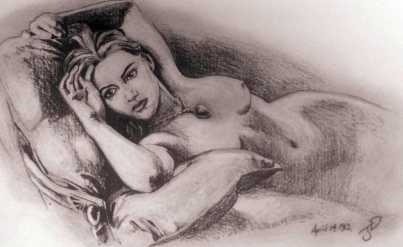

On some occasions you may have noticed that a film carries a tag line which says its "Based on a True Story" or "Based on True Events". James Cameron's TITANIC (1997), for example, falls in this category. 

While a film may be based on a true story or on true events there are certain details which are made up by screenwriters or filmmakers to make it more interesting. In the case of TITANIC, everyone knows there was no Jack Dawson or Rose DeWitt Bukater or Cal Hockley on the actual ship - these fictional characters and others were created to weave an interesting story for the big screen - without them TITANIC would've been a documentary.

In order to make the story authentic, Cameron placed these fictional characters within real situations with actual passengers and crew members who were on the TITANIC, among them were: Captain Edward J. Smith, Thomas Andrews, J. Bruce Ismay, Molly Brown, Colonel Archibald Gracie IV, William Murdoch, Harold Lowe, Henry Wilde, Sir Cosmo Duff Gordon, Lady Duff Gordon, Benjamin Guggenheim, John Jacob Astor, Madeleine Astor, etc. By placing fictional characters among real characters Cameron was able to increase the tension and create drama and romance within very melancholy circumstances.


The advantage for any screenwriter telling the tale of the TITANIC is that most of the story takes place on the ship, so the writer can tell the audience any lie as long as it goes down with the ship (like Cameron did with the Jack and Rose love story). But when a writer is writing a screenplay about a true crime, for example, such liberties might not be possible.

Most true stories are fictionalized to a certain degree otherwise they would come across as dull and boring. What is important when writing such films is that the fiction does not over take the facts - although fictionalization is required in most true stories, it's just as important to stay true to the facts and not be caught up in the fiction.

Below is a list of Films/TV Shows you may be interested in seeing about the TITANIC:
Titanic (1953)
A Night To Remember (1958)
The Unsinkable Molly Brown (1964)
Time Tunnel - TV Series ("Rendezvous with Yesterday" - Pilot, 1966)
S.O.S. Titanic (1979)
Titanic (TV mini-series, 1996)
Titanic II (2012)
Titanic (TV mini-series, 2012)
Titanic: Blood and Steel (TV Drama, 2012)

© Anant Mathur. All Rights Reserved

Tuesday, April 3, 2012

Winners of the 2011 Golden Kela Award

By Anant Mathur (April 03, 2012)

The Golden Kela Award is a satirical take on Bollywood, where awards are given for the worst performances. The Golden Kela Awards was created by Random Magazine, India’s longest running humor magazine in the year 2009. 

The first annual Golden Kela award ceremony took place on 7 March 2009 in New Delhi (India).

The intention behind the Golden Kela is to ridicule the Hindi film stars and acknowledge the worst of Indian Cinema. Since, several award ceremonies each year celebrate the best of Hindi Cinema, Random Magazine and the Sundaas Film Institute chose to be different by giving away the Best of the Worst of Indian Cinema. The winners are selected each year by an online poll.

Winners of the 4th Annual Golden Kela Awards... Cream of the crap:

Worst Actor
Imran Khan
for Mere Brother Ki Dulhan

Worst Actress
Deepika Padukone
for Aarakshan

Worst Supporting Actor
Prateik Babbar
for Dum Maaro Dum and Aarakshan

Worst Supporting Actress
Kangana Ranaut
for Kites, No Problem, Once Upon A Time In Mumbai

Worst Film
Ra.One
(Director: Anubhav Sinha)

Worst Director
Anubhav Sinha
for Ra.One

Worst Debutant Male
Chirag Paswan
for Miley Na Miley Hum

Most Atrocious Lyrics
Amitabh Bhattacharya for Pyar Do Pyar Lo, Jigar Ka Tukda and The Mutton Song

Most Irritating Song
Teri Meri
from Bodyguard

Baawara Ho Gaya Hai Ke
Pankaj Kapoor
for Mausam

Aaja Nach Le
(for Worst Attempt at a Comeback)
Esha Deol
for Tell Me O Kkhuda

Lajja Award
(for the Worst Treatment of a Serious Issue)
Aarakshan

Shakti Kapoor Award
(for Misogyny)
Pyar Ka Punchnaama

F.A.L.T.U. Award
(for the Most Aptly Named Film)
F.A.L.T.U.

The Bas Kijiye Bahaut Ho Gaya Award
Pritam


FOR MORE, VISIT: GOLDENKELA.COM 


© Anant Mathur. All Rights Reserved

Friday, March 30, 2012

Who's the Fairest of them all?

By Anant Mathur (March 30, 2012)

The Hollywood film "Mirror Mirror" adapted from the classic Fairy Tale "Snow White and the Seven Dwarfs" is releasing this Friday, it stars Julia Roberts as The Queen and Lily Collins (daughter of british musician Phil Collins) as Snow White.

We've grown up hearing Fairy Tales and many times some of us have even pictured ourselves as some of these characters. But have you ever wondered which Bollywood celebrity would play the roles of certain Fairy Tale characters if they were given the opportunity. 

Well, wonder no more, I'm going to enlighten you (or freak you out) by sharing my list: 

Pinocchio (Pinocchio) - Shahid Kapoor - Because he still looks like a "real boy". 

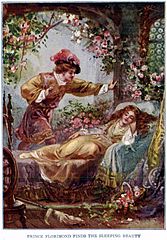
Sleeping Beauty (Sleeping Beauty) - Sonam Kapoor - She could play this part in her sleep, literally.

Prince (Sleeping Beauty) - Emran Hashmi - Who better than the "serial kisser" to wake a sleeping beauty. 


Rapunzel (Rapunzel) - Asin - Her beautiful hair speaks plenty - the makers of Lux would agree! 

Pied Piper (The Pied Piper of Hamelin) - Shahrukh Khan - A man who can lead children to the cinema halls to see a useless film like Ra.One can lead them anywhere. 

The Little Mermaid (The Little Mermaid) - Amrita Rao - Mermaids, supposedly, live for over 300 years. Amrita means "Immortal" - it's a no-brainer.

Rumpelstiltskin (Children's and Household Tales
) - Aditya Chopra - There's no one else in tinsel ville who makes such costly deals.

Belle (Beauty and the Beast) - Priyanka Chopra - It's simple, her name means beauty.

King Midas (King Midas and his Golden Touch) - Amitabh Bachchan - Because everything Big B touches... turns to gold. 


Cinderella (Cinderella) - Katrina Kaif - She has what it takes to be the belle of the ball.

Prince (Cinderella) - Salman Khan - It's only fair, if Katrina is to play Cinderella, he plays her fella.

Red Riding Hood (Little Red Riding Hood) - Vidya Balan - After seeing her in "The Dirty Picture", No one will argue how good she looks in red.

Frog Prince (The Frog Prince) - Saif Ali Khan - If you're gonna kiss frogs to find a prince then he's the one every girl probably dreams of - who better to portray the from prince than the Nawaab of Pataudi.


This post wouldn't be complete if we didn't do some characters from SNOW WHITE:


Snow White (Snow White and the Seven Dwarfs) - Kareena Kapoor - Isn't she the fairest of them all (at least in Bollywood)?

Prince Charming (Snow White and the Seven Dwarfs
) - Abhishek Bachchan - If nothing else, one thing Abhishek has ample of is... Charm.

Evil Queen (Snow White and the Seven Dwarfs
) - Ekta Kapoor - Come on, you saw that one coming.

The Mirror (Snow White and the Seven Dwarfs
) - Karan Johar - He's the perfect side kick to Ekta Kapoor, afterall, they are producing a film together.

If you enjoy Fairy Tales and want to learn more about them please click here.


© Anant Mathur. All Rights Reserved.

Friday, March 23, 2012

Oldie Goldies!

By Anant Mathur (March 23, 2012)

Occasionally, I like to inform my readers about new bands or songs which are unique or they may not have heard of. Today is one such day. Below is a list of some old songs which I love and I think you will enjoy, so have a listen and tell me what you think by posting a comment.

George Formby:
Chances are you've probably never heard of this guy. Born in England, in 1904, Formby was a major stage and screen star in the 1930s and 1940s. He sang light, comical songs, accompanying himself on the banjo ukulele or banjolele. Here are some of his songs:


Carmen Miranda:
Carmen Miranda was a Portuguese-born Brazilian samba singer, Broadway actress and Hollywood film star popular in the 1940s and 1950s. She was, by some accounts, the highest-earning woman in the United States and noted for her signature fruit hat outfit she wore in the 1943 movie The Gang's All Here. Her song I, Yi, Yi, Yi (I Like You Very Much) was covered by Alvin and the Chipmunks along with "Cunato Le Gusta" for their 1987 film The Chipmunk Adventure and its soundtrack.


Charlie Kunz:
Kunz was an American-born British musician. Born in Allentown, Pennsylvania in 1896, he made his debut aged six. During World War I he led his own resident band, while working in a munitions factory. He came to England in 1922 as a pianist in a small dance band. His debut as a soloist came in 1934 at the Holborn Empire.

Friday, March 16, 2012

In The Name Of The...Mother?

By Anant Mathur (March 16, 2012)

It's unbelievable how much women have accomplished in the last 100 years, today we take much of it for granted but a century ago most people believed that a woman's place was in the home, they couldn't vote, few of them attend college/universities or worked professionally. Today, women can be found in almost every profession not just teachers or nurses but as CEO's of large corporations, Prime Ministers of Nations, Astronauts, Athletes, Doctors, Lawyers, Scientists, Engineers, etc. It's truly been an inspirational journey.

Considering all that they have accomplish, by changing the thinking of men, it has always troubled me that they haven't been able to perform a simple task; that is, they haven't been able to convince men to take their maiden names as the family name after marriage. There are many women who refuse to change their name after marriage and keep their maiden name, although it's commendable that they have the power to do so, it always surprises me that women can't get the men to take their last name instead.

Keeping religion and personal belief out of it, I don't think there are any reasons why a man can't take his wife's last name. I mean men today are so different (Metro-sexual) than a hundred years ago that it shouldn't be hard to convince today's generation to take the last name of their wives. Most women I know have changed their last names after marriage. Once upon a time it was easily done. Today, it's a big hassle - getting a new passport, credit card(s), license, e-mail address, etc.

The question is are men comfortable with the idea of taking the last name of their wives? Although we may agree that men can take a woman's name, is it possible? What's so special about keeping a certain last name. We scream women power and women are this, women are that, but after marriage we expect the wife to change her name and in most cases she does, why? When she has won so many battles why is a woman so easily persuaded when it comes to changing her name?

Why is this so trivial, why can't women compel their men to take their last name? My personal preference is that they take both last names. A man takes his wife's last name before his own  and a woman does the same. For example, if he's named Mike Smith and she's Amy Jones, he becomes Mike Jones Smith and she becomes Amy Smith Jones. It's an interesting idea, I hope...

© Anant Mathur. All Rights Reserved.


DISCLAIMER: The above post is meant for entertainment purposes only; readers shouldn't take it seriously or interpret it as advice.

Wednesday, March 7, 2012

Tip # 7: Imagination

By Anant Mathur (March 07, 2012)

Perhaps the two most important ingredients of writing are extensive research and a great Imagination. I have spoken about the importance of research in the past, so this post will be about our limitless imagination.

For a writer imagination is the key to telling a great story, if you've read the works of Jules Verne, Sir Arthur Conan Doyle, Ruskin Bond, Lewis Carroll, Mark Twain, Ian Fleming, R.K. Narayan, Rudyard Kipling, Sarat Chandra Chattopadhyay, J. R. R. Tolkien, William Shakespeare, Agatha Christie, Harivansh Rai Bachchan, H.G. Wells, The Brothers Grimm, J. K. Rowling, etc. - you will agree how imaginative these writers are. They not only know their subject, they researched it well and understood it to such a degree that you could easily believe what they were saying. 

If we take a look at French writer Jules Verne's novel From The Earth To The Moon the story is not just full of imagination but has calculations which show how brilliant the writer is. A lot of the calculations which Jules Verne made came pretty close to what actually is - but he wrote about them more than a century before man ever set foot on the moon. Verne wrote about space, air and underwater travel before air travel and practical submarines were invented, and before practical means of space travel had been devised. Verne was not only a great writer but perhaps one of the greatest minds of his time.

Similarly, J. R. R. Tolkien whose work most of you are probably familiar with if you've read The Lord of the Rings series of books or watched the films by Peter Jackson. Tolkien not only wrote mythological adventure stories with great imagination but was also able to construct several languages unique to his stories.

Like Jules Verne, H.G. Wells also used scientific facts and figures in his writings, but what made his writings a little different than those of Verne were that he used psychology as well. He gets inside the head of his characters and helps the reader understand why the character is behaving the way he is and what's causing him to do the things he does - this can be easily understood if you've read his stories like The Invisible Man, The War of the Worlds, The Island of Doctor Moreau and The Time Machine.
 
Rudyard Kipling was born in Bombay, India to British parents, though he would live in many places throughout his life, he returned to India many times. Several of his stories and poems (The Jungle Book, Kim, Gunga Din, The Second Jungle Book, etc.) took place in India.

As fantastically imaginative as J.K. Rowling's Harry Potter stories are it's doubtful that she would've written a single word without doing the proper research on wizards and magic. Most writers are inspired by what is happening in their life at the time they're writing a particular work - in the case of Rowling, she used a lot of what she was going through at the time to write situations and characters for Harry Potter.


Sarat Chandra Chattopadhyay is one of the most popular Indian writers. His Devdas is easily one of the most recognized characters in Indian literature. Several of his stories have been turned into feature films in many Indian languages - Devdas, in particular, has been made 8 times in Hindi, Bengali and Telugu. Born into poverty in the late 1800s, Sarat Chandra wrote stories which took place in his present time and which were about the common man of that era - their struggles and triumphs - most of his stories were based on his experiences in Bhagalpur where he spent 20 years of his life. His lack of financial stability drastically effected his writings.

Today, most of the shows on Indian television are either reality-based or have writers who lack the imagination of the above mentioned geniuses of our time. I for one ignore reality TV, give me a dose of good imagination any day over these useless reality dramatizations which not only lack imagination but also become repetitive quite fast. Bollywood films are no better, although filmmakers are trying new genre they just don't have the creative abilities to tell a good story in simple terms - they lack imagination. 

There have been very few novelists in India who can stir our imagination. Most Indian novelists today can't write sci-fi the way H.G. Wells or Jules Verne could. The few who are writing are not doing anything which one would consider creative. Once in a long while we get a great book or novel from an Indian writer, but how long must we wait before we have another classic at the same level as Devdas or The Guide? Today a novelist might be able to write a story that gets on the best sellers list, but unlike Devdas and The Guide, they're soon forgotten.

There's more to writing than plot points and characters - Imagination is key. But a great writer is not only someone who has great imagination, it is also someone who has the ability to write a story that can convince the reader that what he has written is believable. Again if we look at Verne, his "From The Earth To The Moon" is a complete departure from "20,000 Leagues Under the Sea" which again is a different from "Around The World In Eighty Days", but the one thing all his story have in common is that they are believable and enjoyable for the reader. It's difficult to put down a Jules Verne novel.

It's critical for a writer to experience life. Jules Verne was French but he could write about America, India, China, Europe or any place his heart desired - and it is believable because he combined his great imagination with research and the experiences of his life - great writers have an uncanny ability to do that. If you only have one job, live in one city and have the same friends your entire life your life is quite boring and it's doubtful you've had too many experiences which would fire-up your imagination to the same level as some who has moved around a lot and experienced different parts of the world. If only for a day or a few hours every writer should: work at a gas station or a pizza place or newspaper, ride a horse, take the train, listen to music you normally wouldn't (perhaps even in other languages) travel, discover other cultures, etc. - but while you're doing all this - learn as much as you can, as a writer these experience will grow your imagination.

Ian Fleming is best known for his series of James Bond novels and short stories. But few may know that he also wrote the children's story Chitty Chitty Bang Bang which was later turned into a films starring Dick Van Dyke. 

Although most novelists pick one genre and continue to write in that direction, a screenwriter must have the ability to write different genres if only to survive in a very competitive industry.

Perhaps the best example of a writer who could easily switch genres is William Shakespeare. It is widely accepted that Shakespeare has covered all the possible plots in his many years of writing. A playwright and a poet, Shakespeare has written 38 plays, 154 sonnets, 2 long narrative poems and several other poems. Shakespeare could write a tragedy, followed by a comedy followed by an adventure story better than anyone. It comes as no surprise then that most of his plays have been adapted into films. He understood his audience perfectly and in many ways was well ahead of his time. 
 
You know when I started writing this post I thought it would purely be about imagination, but as it turned out a part of it ended up being about how important research is for a writer's imagination. As you can see, research is not only essential for telling a good story but it plays a big part in stimulating the imagination of a writer.

The one thing to take away from this post is that it is extremely important to grow as a screenwriter. A screenwriter who is only able to write a single genre such as Romance, Drama or Mystery has not grown and soon will run out of ideas (there are only so many romantic scenes one screenwriter can write before he gets repetitive - this is why most Indian director have a hard time after their first two films - look at the struggling Sanjay Leela Bhansali, Karan Johar, Ashutosh Gowariker, etc.). Getting your mind away from a genre for a little while will also help you the next time you attempt it. If you've written a Drama, try your hand at Science Fiction next and then do a Comedy or Murder Mystery or combine a couple of genres (the results could surprise you). But always remember to research your subjects, your brain will thank you by taking your imagination to new heights...

© Anant Mathur. All Rights Reserved.

Friday, February 24, 2012

Winners of the 2012 FilmFare Awards

By Anant Mathur (February 24, 2012)


It's award seasons and in case you missed it last weekend here are the winners of the 57th Annual FilmFare Awards:


Nominees for Best Actor (Male)

Ajay Devgn - Singham
Amitabh Bachchan - Aarakshan
Hrithik Roshan - Zindagi Na Milegi Dobara 
Ranbir Kapoor - Rockstar
Salman Khan - Bodyguard 
Shah Rukh Khan - Don 2

Winner: Ranbir Kapoor - Rockstar


Nominees for Best Actor (Female)

Katrina Kaif - Mere Brother Ki Dulhan
Mahie Gill - Saheb Biwi Aur Gangster
Priyanka Chopra - 7 Khoon Maaf
Vidya Balan - No One Killed Jessica
Vidya Balan - The Dirty Picture
     
Winner: Vidya Balan - The Dirty Picture 


Nominees for Best Director

Abhinay Deo - Delhi Belly
Farhan Akhtar - Don 2
Imtiaz Ali - Rockstar
Milan Luthria - The Dirty Picture
Zoya Akhtar - Zindagi Na Milegi Dobara

Winner: Zoya Akhtar - Zindagi Na Milegi Dobara


Nominees for Best Supporting Actor (Male)

Abhay Deol - Zindagi Na Milegi Dobara
Farhan Akhtar - Zindagi Na Milegi Dobara
Nasseruddin Shah - The Dirty Picture
Pitobash Tripathy - Shor in the City
Vir Das - Delhi Belly

Winner: Farhan Akhtar - Zindagi Na Milegi Dobara


Nominees for Best Supporting Actor (Female)

Juhi Chawla - I Am
Kalki Koechlin - Zindagi Na Milegi Dobara
Parineeti Chopra - Ladies Vs Ricky Bahl
Rani Mukherjee - No One Killed Jessica
Swara Bhaskar - Tanu Weds Manu
    
Winner: Rani Mukherjee - No One Killed Jessica
   

Nominees for Best Music Director

A R Rahman - Rockstar
Ram Sampat - Delhi Belly
Shankar Ehsaan Loy - Zindagi Na Milegi Dobara
Sohail Sen - Mere Brother Ki Dulhan
Vishal Shekhar - Ra One

Winner: A R Rahman - Rockstar


Nominees for Best Singer (Male)

Akon & Vishal Dadlani: Chammak Challo - Ra One
Mohit Chauhan: Jo Bhi Mei - Rockstar
Mohit Chauhan: Sadda Haq - Rockstar
Rahat Fateh Ali Khan: Teri Meri - Bodyguard
Shafqat Amanat Ali: Dildaara - Ra One
      
Winner: Mohit Chauhan: Jo Bhi Mei - Rockstar


Nominees for Best Singer (Female)

Alyssa Mendonsa: Khwabon Ke Parindey - Zindagi Na Milegi Dobara
Hard Kaur: Katiya Karoon - Rockstar
Rekha Bhardwaj & Usha Uthup - Darling - 7 Khoon Maaf
Shreya Ghoshal - Teri Meri - Bodyguard
Shreya Ghoshal - Saibo -Shor in the City

Winner: Rekha Bhardwaj & Usha Uthup - Darling - 7 Khoon Maaf


Nominees for Best Lyrics

Gulzar: Darling - 7 Khoon Maaf
Irshad Kamil: Nadaan Parindey - Rockstar
Irshad Kamil: Sadda Haq - Rockstar
Javed Akhtar: Senorita - Zindagi Na Milegi Dobara
Vishal Dadlani/Niranjan Iyengar - Chammak Challo - Ra. One

Winner: Irshad Kamil: Sadda Haq - Rockstar


Best Dialogue: 
Farhan Akhtar for Zindagi Na Milegi Dobara.  
 

Best Screenplay: 
Akshat Verma for Delhi Belly
 

Best Story: 
Sanjay Chauhan for I Am Kalam
 

Best Actor (Critics) Award:  
Ranbir Kapoor for Rockstar
 

Best Actress (Critics) Award:  
Priyanka Chopra for 7 Khoon Maaf
 

Best Film (Critics) Award:  
Zindagi Na Milegi Dobara
 

SPECIAL FILMFARE AWARD:  
Partho Gupte for Stanley Ka Dabba
 

LIFETIME ACHIEVEMENT AWARD: 
Aruna Irani
 

Idea Sony Scene of the Year Award: 
The Dirty Picture 


FILMFARE MUSIC AWARDS:
RD Burman Award for Best upcoming Talent:
Krishna for Tanu weds Manu

 
Best Choreography: 
Bosco-Caesar:
'Senorita', Zindagi Na Milegi Dobara 
 
Best Background Score: 
Ranjit Barot: Shaitan


FILMFARE DEBUT AWARDS: 
 
Best Debut Director Award: 
Abhinay Deo: Delhi Belly
 
Best Debut (Male) Award: 
Vidyut Jamwal: Force 

Best Debut (Female) Award: 
Parineeti Chopra: Ladies vs Ricky Bahl 
 
 
FILMFARE TECHNICAL AWARDS:

Best Action: 
Mathhias Barsch: Don 2. 

Best Cinematography: 
Carlos Catalan: Zindagi Na Milegi Dobara 

Best Editing: 
Huzefa Lokhandwala: Delhi Belly 


Best Production Design: 
Shashank Tere: Delhi Belly 

Best Sound Design: 
Nakul Kamte: Don 2 

Best Costume Design Award: 
Niharika Khan: The Dirty Picture


© Anant Mathur. All Rights Reserved.

Friday, February 17, 2012

Interesting Facts About FilmFare Awards

By Anant Mathur (February 17, 2012)

With the 57th Filmfare Awards coming up this Sunday night, I thought it would be interesting to let my readers know some interesting facts about this most awaited night in Bollywood.

FilmFare Awards are considered to be the equivalent of the Oscars in India. 

Every actor, director, producer, writer, singer and technician dreams of winning one someday.

Did you know that of the 56 best picture winners, so far, 28 film have had single word titles. Films with 2 and 3 word titles have won 6 times each. While 4 word titles have won 12 times, titles with 5 word have won 3 times and titles with 6 words have won only once. No films with more than 6 words in the title have ever won a best picture FilmFare award. So according these facts there is a 71.42% chance that either Rockstar or Zindagi Na Milegi Dobara will win best picture this year.

The first film to win best picture had a 3 word title (Do Bigha Zamin) and the third film to win best picture had a one word title (Jagriti). Interestingly, the second film to win had 2 words in the title (Boot Polish).

Black (2005) has won the most FilmFare awards in a single year with 11. Next in line are Dilwale Dulhania Le Jayenge and Devdas (2002) with 10 each.

Bimal Roy leads with his 7 awards for Best Director, no one else comes close.

Dilip Kumar and Shahrukh Khan have won 8 best actor awards. Amitabh Bachchan has won 5 as best actor and 3 in the best supporting actor category.

Nutan and her niece Kajol have both won the Best Actress award 5 times. Nutan also has one for Best Supporting Actress. Madhuri Dixit has 4 Best Actress and 1 Best Supporting actress awards. Jaya Bhaduri has 3 Best Actress and 3 Supporting awards.

Most awards for Music Direction belong to A.R. Rahman and Shankar-Jaikishan they each have 9 wins. A.R. Rahman also has 12 Filmfare Awards South awards for Best Music Direction (Tamil) 9 of which he won for 9 straight years from 1993 to 2001.

Most awards for Playback (Male) belong to Kishore Kumar who has 8. Next in line is Mohd. Rafi with 6 wins.

Asha Bhosle and Alka Yagnik each have 7 awards for Playback (female).

18 FilmFare awards have been won in the Best Lyrics category by Gulzar and Javed Akhtar. With 10 wins Gulzar has a slight edge on Javed Akhtar who is close behind with 8 wins.

© Anant Mathur. All Rights Reserved.